



Begin with the missing sea
At Ephesus, one of the most useful things to imagine is something the visitor cannot see beside the ruins: the ancient shoreline. The monuments stand inland today, but the settlement’s history is tied to its former harbour. Thinking about that absent water changes the way the streets and public spaces read.
UNESCO describes successive Hellenistic and Roman settlements shifting as the coastline retreated. The site preserves evidence of a port city, including its harbour basin and sea channel. Ephesus was added to the World Heritage List in 2015. These details turn a visit from a collection of impressive ruins into a question about how geography shapes urban life.
The library as a doorway into the city
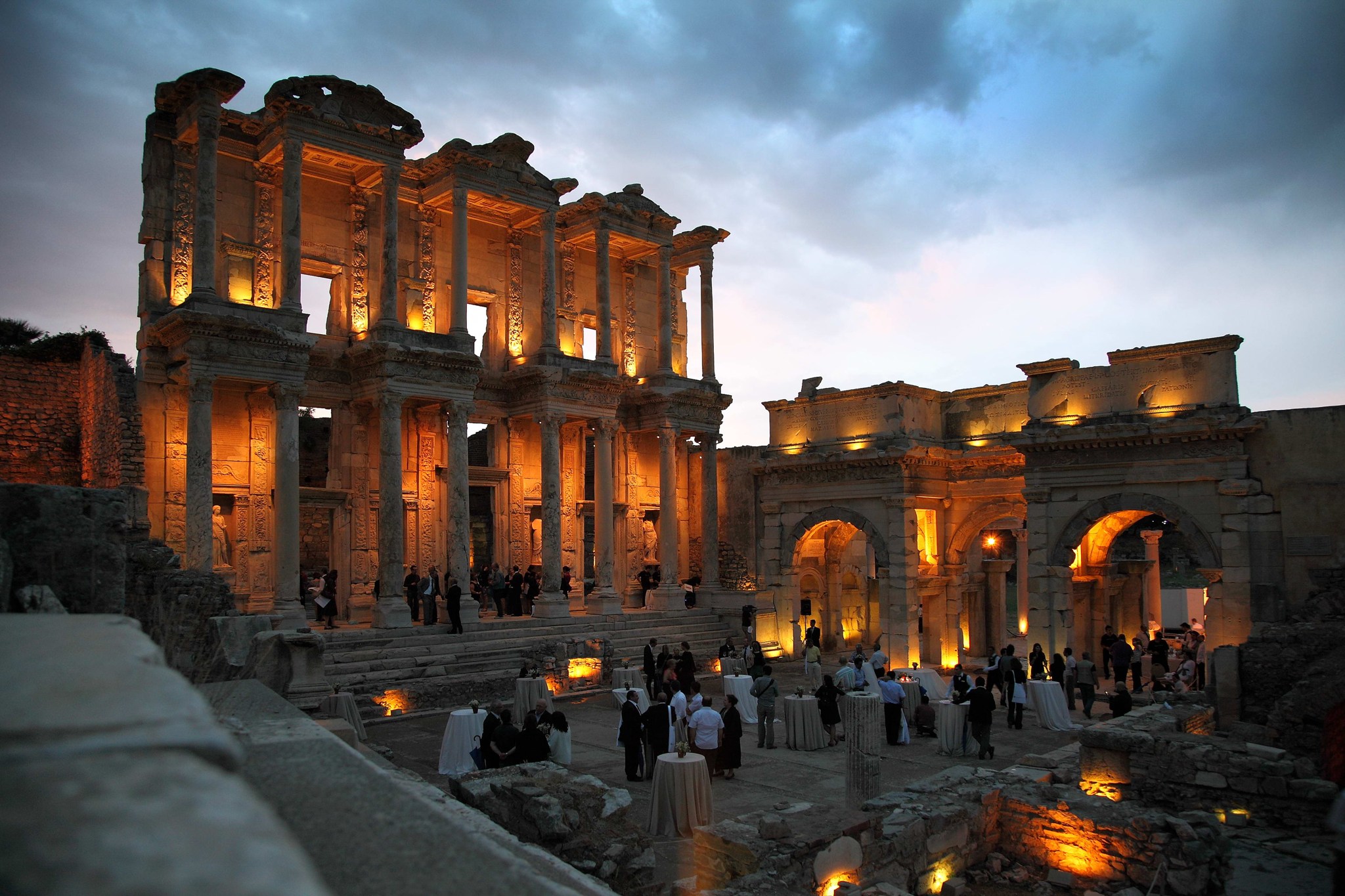
The Library of Celsus offers an immediately recognisable image: columns, openings and a carefully ordered facade. Give it time, but resist making it the finish line. Step back to notice how its scale relates to the surrounding street. A building becomes easier to understand when it is allowed to belong to a larger setting.
Look for the difference between a surviving fragment, a reconstructed element and a complete-looking elevation. On-site interpretation is essential here. A restored facade can help visitors imagine an ancient structure, while also reminding us that archaeology involves decisions about what to reveal and how to present it.
Follow the connections
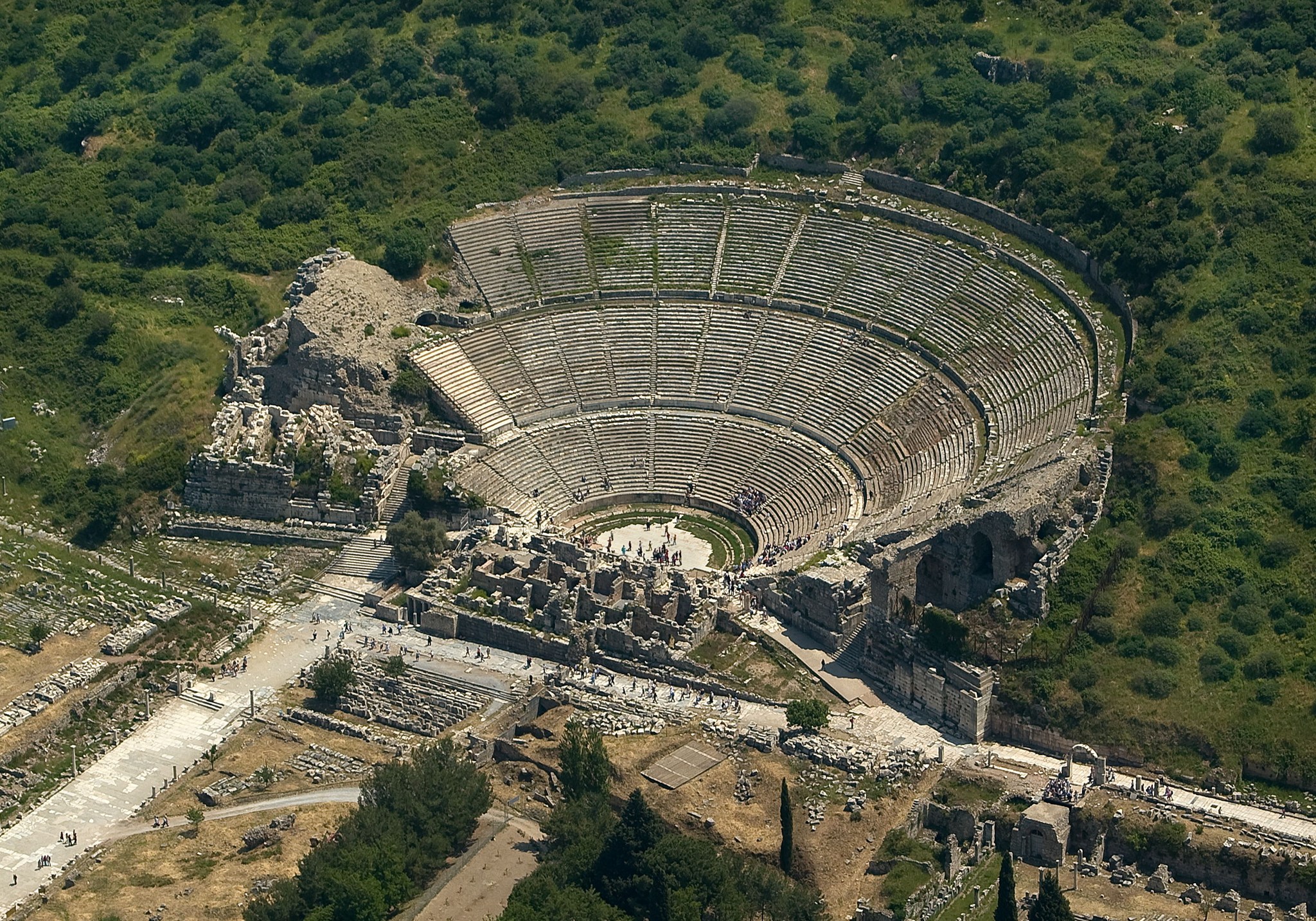
The Great Theatre makes a useful counterpoint to the library. One focuses attention on an architectural face; the other opens into a large shared space. Move between them with your eyes on street alignments, changes in level and the relationship between the buildings. Those connections are part of the story.
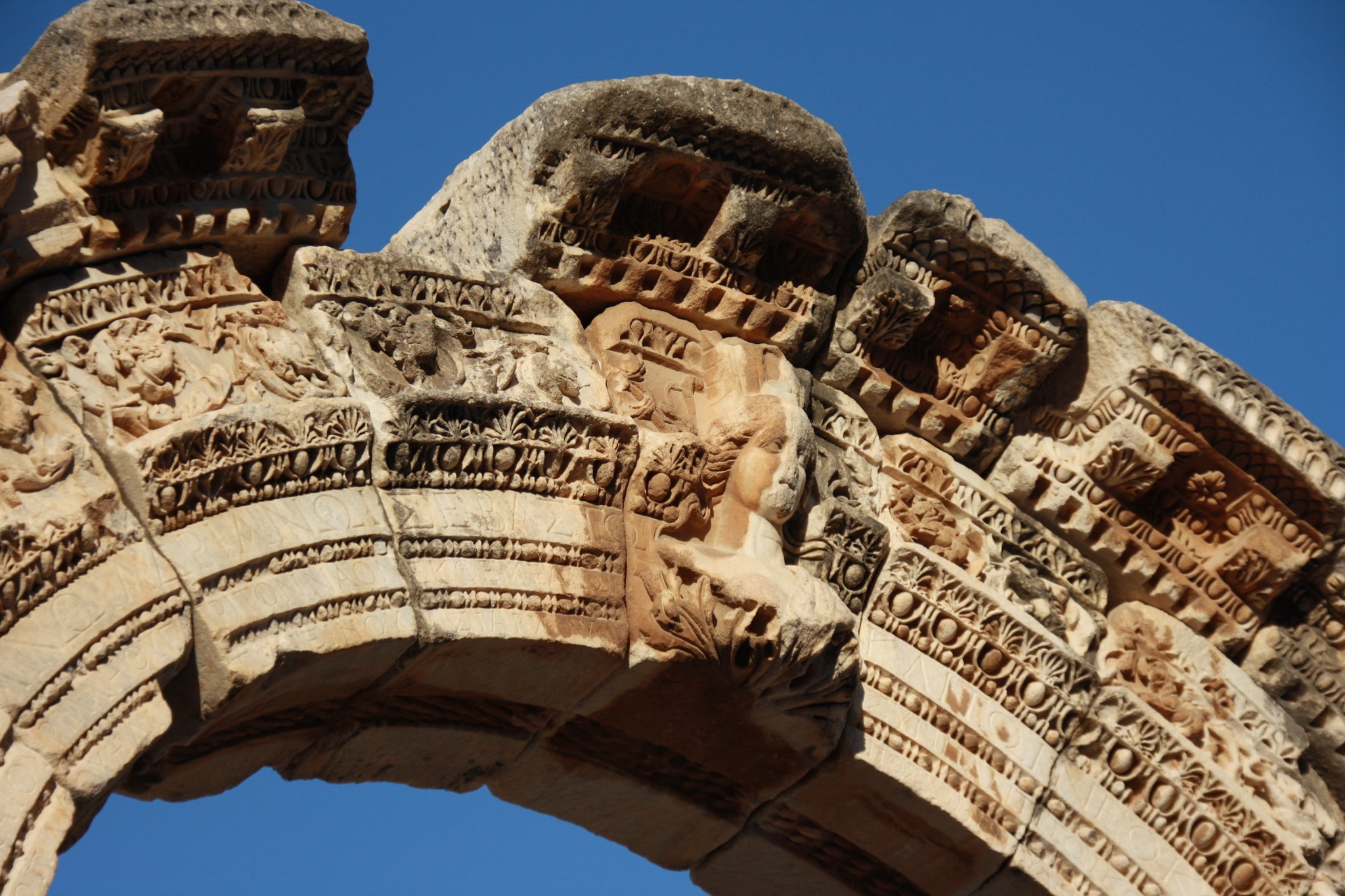
A closer view of the Temple of Hadrian adds another scale of observation: an arch, carved decoration and the texture of weathered stone. It is tempting to supply a dramatic story for every detail. Read the labels first, and distinguish what the evidence establishes from what imagination contributes. The most persuasive ancient city is the one we allow to remain partly unknown.
Make the visit a reading exercise
Choose a few things to examine carefully instead of trying to photograph every monument. A broad view establishes context, a middle-distance view explains a relationship, and a detail reveals material or workmanship. This sequence works equally well in a notebook and in a camera roll.
Bring water, sun protection and shoes with a firm grip; exposed stone and uneven surfaces call for an unhurried pace. Follow marked routes and conservation barriers, and confirm current entry arrangements with the official operator before travelling. Return mentally to the harbour at the end of the walk. A city once organised around movement across water now asks us to discover its connections on foot.