

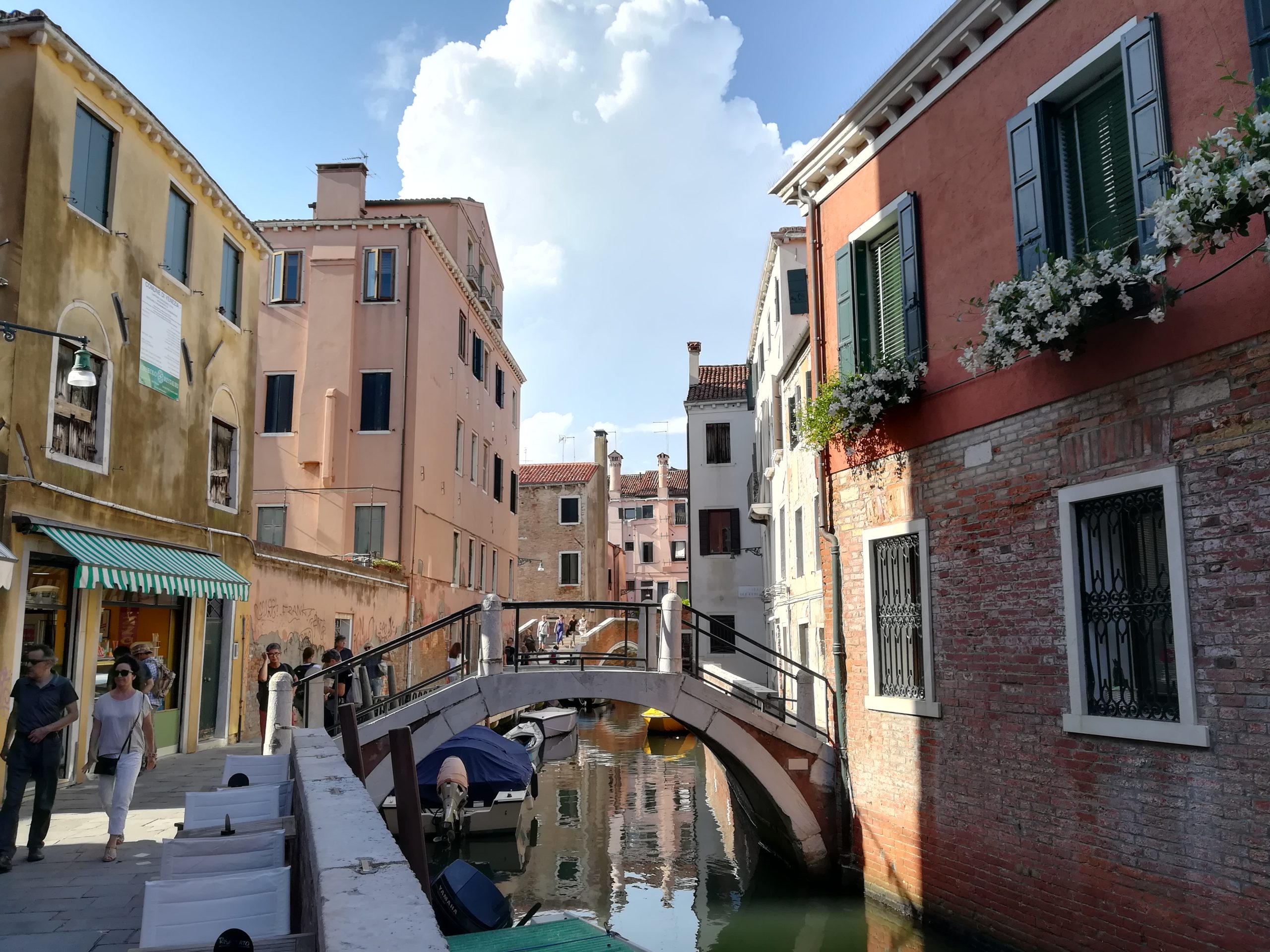
Venice has no shortage of recognisable images. The more interesting photographic challenge is to notice what those images leave out: the edge of a reflection, a working doorway, the scale of a bridge or the way a quiet stretch of waterfront changes the pace of a walk. Dorsoduro offers a useful framework for practising that attention.
Choose a district, then look slowly
Venezia Unica’s official Dorsoduro itinerary connects places including Campo Santa Margherita, San Barnaba, the Squero di San Trovaso, the Zattere, Punta della Dogana and the Accademia area. Use that itinerary as a planning reference, then choose a modest section rather than racing to every stop. The goal of this photographic approach is to make time for observation. See the official Dorsoduro itinerary.
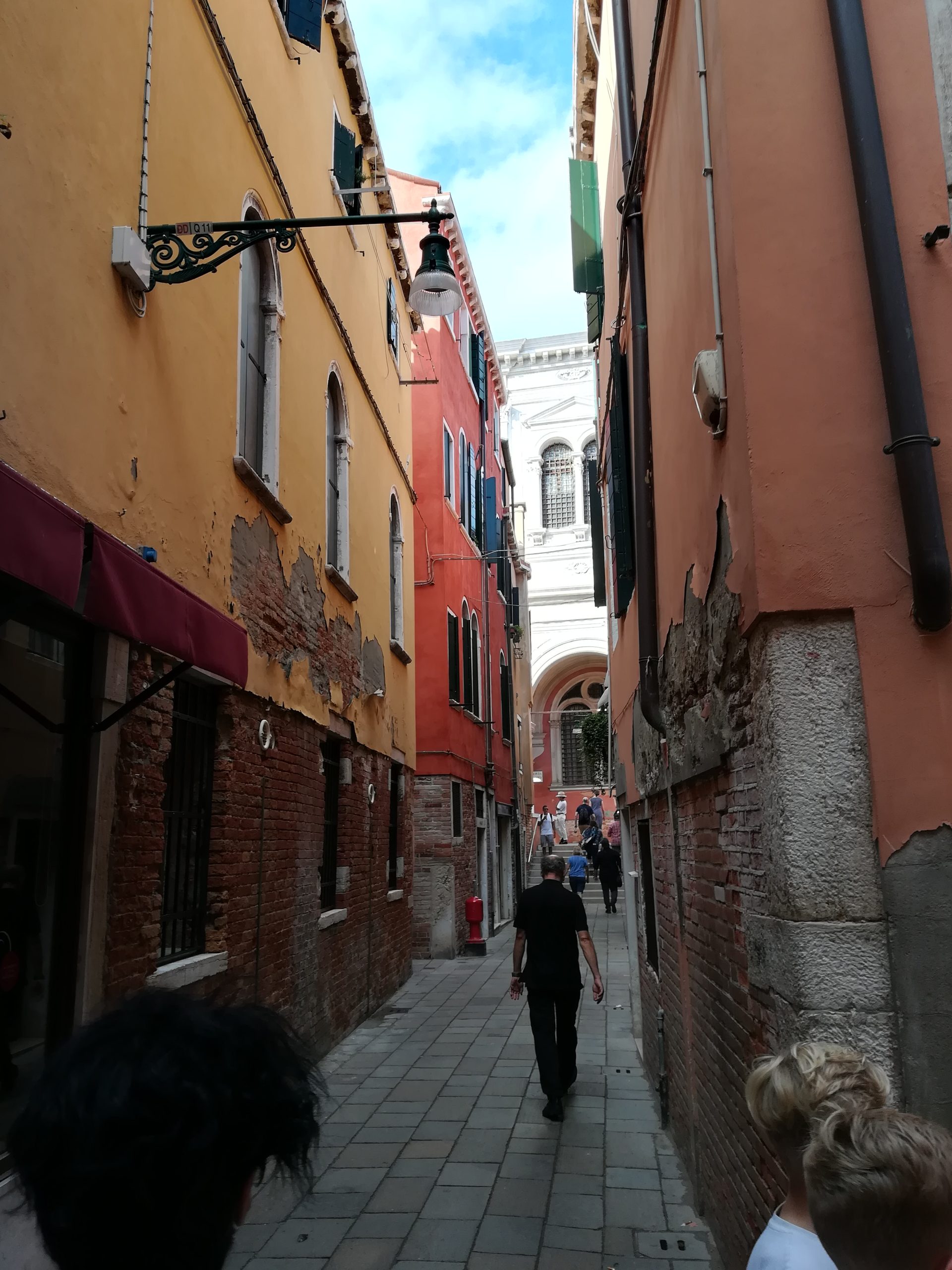
Work with three kinds of photograph
Begin with a wide frame that explains the setting. Follow it with a medium view of a relationship: a bridge over water, a doorway facing a canal, or people moving through a square. Finish with a close detail such as worn stone or light on plaster. Together, these frames can tell a more coherent story than a collection of unrelated landmarks.
Let reflections add a second layer
A reflection can simplify a busy scene or turn an ordinary surface into an abstract composition. Try adjusting your position before changing equipment. Look at the edges of the frame, wait for a distracting element to pass and compare what happens when the horizon moves. These are general photographic exercises, not a promise about the light or conditions you will find on a particular day.
Keep daily life in the picture
The City of Venice’s EnjoyRespectVenezia campaign asks visitors to consider the city’s environment, heritage and residents. For a photographer, that means leaving room for people to move and treating residential life with care. Ask before making an identifiable person the subject of a portrait; an attractive composition is not a reason to obstruct a doorway or a narrow crossing. Read the city’s responsible-visitor guidance.
Plan before setting out
Consult official information for access arrangements, transport and any venue you intend to enter. This article is a creative walking approach, not a guarantee of museum admission, empty streets or permission to photograph inside a building. The most useful image may be a small detail you understand, rather than a landmark you recognise.